Introduction
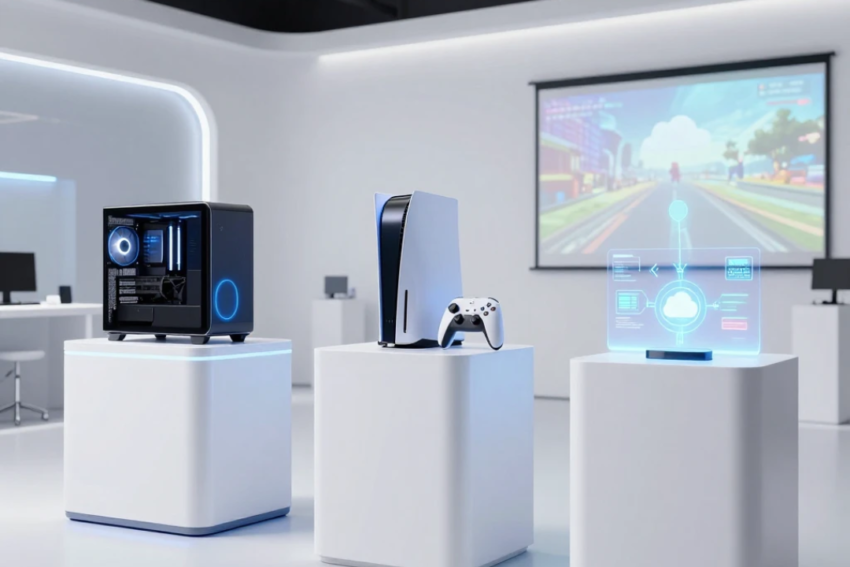
The gaming industry is changing faster than ever. In 2026, new gaming technology is transforming how players experience games across PCs, consoles, handheld devices, and cloud platforms. Artificial intelligence, advanced graphics, faster processors, high-refresh-rate displays, virtual reality, cloud gaming, and improved networking are creating more immersive and interactive experiences.
The gaming technology trends in 2026 are not limited to better graphics. Modern gaming is becoming more connected, intelligent, portable, and personalized. Developers are using advanced tools to create larger worlds, smarter characters, and more realistic environments, while hardware manufacturers continue to improve performance and efficiency.
For gamers, understanding these trends can help them choose the right hardware, accessories, and platforms for the future.
What Is Gaming Technology?
Gaming technology includes the hardware, software, networking systems, and digital services used to create and play video games.
It includes:
- Gaming PCs
- Consoles
- Handheld gaming devices
- Graphics cards
- CPUs
- Gaming monitors
- Controllers
- VR headsets
- Cloud gaming platforms
- Game engines
- AI technologies
In 2026, these technologies are increasingly connected, creating a broader gaming ecosystem.
1. AI Is Transforming Gaming
Artificial intelligence is one of the biggest developments in modern gaming.
AI is being used across different parts of the gaming industry, including development, gameplay, graphics, and personalization.
Developers can use AI to assist with:
- Game testing
- Animation
- Dialogue
- Asset creation
- World design
- Character behavior
- Quality assurance
Smarter NPCs
AI can also improve non-player characters.
Instead of following simple predefined patterns, future NPCs may respond more dynamically to player actions.
This can make game worlds feel more realistic and unpredictable.
AI may also be used to personalize difficulty, recommendations, and gameplay experiences.
2. Advanced Gaming PCs
Gaming PCs remain one of the most powerful gaming platforms.
Modern gaming computers can combine high-performance CPUs, powerful GPUs, fast RAM, and SSD storage.
A strong gaming PC can provide:
- High frame rates
- Better graphics
- Faster loading
- Advanced ray tracing
- High-resolution gaming
- Multitasking capabilities
Importance of the GPU
The graphics processing unit is particularly important for modern gaming.
A powerful GPU can improve:
- Resolution
- Frame rates
- Ray tracing
- Texture quality
- Visual effects
Gamers interested in 1440p or 4K gaming should carefully balance GPU performance with CPU capabilities.
3. Next-Generation Console Gaming
Consoles continue to provide a convenient gaming experience.
Modern consoles combine powerful hardware with optimized software.
Major advantages include:
- Easy setup
- Consistent hardware
- Exclusive games
- Digital game libraries
- Online services
- Controller integration
Console technology is increasingly focused on fast storage, high frame rates, improved graphics, and immersive audio.
Faster Storage
SSD technology has significantly improved loading times.
Modern games can use fast storage to stream large environments and reduce waiting periods.
4. Cloud Gaming Is Expanding
Cloud gaming allows supported games to run on remote servers and stream gameplay to compatible devices.
This can reduce the need for extremely powerful local hardware.
Potential benefits include:
- Device flexibility
- Instant access to supported games
- Reduced hardware requirements
- Cross-device gaming
Players may be able to use supported services across PCs, mobile devices, televisions, and other platforms.
Challenges of Cloud Gaming
Cloud gaming depends heavily on:
- Internet speed
- Network stability
- Latency
- Server availability
A poor connection can result in input delay, image quality problems, or interruptions.
5. Handheld Gaming Technology
Portable gaming is becoming increasingly popular.
Modern handheld devices combine gaming-focused hardware with portable designs.
They can provide access to demanding games without requiring a traditional gaming setup.
Important handheld features include:
- Processor performance
- GPU capability
- Screen quality
- Battery life
- Storage
- Weight
- Cooling
Why Handheld Gaming Matters
Handheld gaming gives players more flexibility.
Gamers can play in different locations without sitting at a desktop or television.
The category is also encouraging innovation in portable displays, battery technology, and efficient processors.
6. High Refresh Rate Gaming Monitors
Gaming monitors continue to evolve.
High-refresh-rate displays can provide smoother gameplay and more responsive experiences.
Common features include:
- High refresh rates
- Low response times
- Adaptive sync
- HDR
- High resolution
- Low input latency
Competitive gamers often prioritize refresh rate and response time.
Single-player gamers may prioritize resolution, HDR, color quality, and immersive visuals.
7. Ray Tracing and Realistic Graphics
Graphics technology continues to improve.
Ray tracing can simulate how light interacts with surfaces, creating more realistic reflections, shadows, and lighting effects.
Modern GPUs can use hardware acceleration and advanced rendering techniques to improve performance.
AI-Assisted Graphics
AI can also contribute to graphics technologies.
Upscaling and frame-generation techniques can help increase perceived performance while maintaining image quality.
These technologies are becoming increasingly important for high-resolution gaming.
8. Virtual Reality and Mixed Reality Gaming
Virtual reality continues to provide immersive gaming experiences.
VR headsets can place players inside digital environments.
Applications include:
- Gaming
- Fitness
- Simulation
- Training
- Social experiences
Mixed reality can combine digital objects with the physical environment.
Future gaming experiences may use improved tracking, higher-resolution displays, better controllers, and more natural interfaces.
9. Advanced Gaming Controllers
Controllers are also becoming more sophisticated.
Modern gaming controllers can include:
- Adaptive triggers
- Haptic feedback
- Motion controls
- Custom buttons
- Wireless connectivity
Haptic feedback can provide physical sensations that correspond to actions in games.
This can make interactions feel more immersive.
10. Gaming Audio Technology
Sound is an important part of gaming immersion.
Modern gaming headsets and audio systems can provide:
- Surround sound
- Spatial audio
- Noise cancellation
- Clear microphones
- Wireless connectivity
Spatial audio can help players understand where sounds are coming from.
This can be especially useful in competitive games where directional audio matters.
11. Faster Gaming Networks
Online gaming depends heavily on network performance.
Fast and stable connections can reduce latency and improve multiplayer experiences.
Modern gaming networks benefit from:
- High-speed broadband
- 5G connectivity
- Wi-Fi improvements
- Better routing
- Modern server infrastructure
Low latency is particularly important for competitive multiplayer games.
Even powerful hardware cannot fully compensate for poor network performance.
12. Cross-Platform Gaming
Cross-platform gaming is becoming increasingly important.
Players on different supported platforms can potentially play together.
This can create larger multiplayer communities and give players greater flexibility.
Cross-platform ecosystems can also make gaming more accessible because users are less restricted by hardware choice.
13. Game Engines Are Becoming More Powerful
Game engines are essential tools for modern game development.
They allow developers to create:
- 3D environments
- Physics
- Lighting
- Characters
- Animation
- Audio systems
- Multiplayer functionality
Modern engines are increasingly designed to support realistic graphics and large interactive worlds.
AI tools may also speed up certain development workflows.
14. Gaming and Digital Streaming
Game streaming has expanded beyond cloud gaming.
Players can broadcast gameplay to online audiences using streaming platforms.
Modern gaming PCs and consoles can support:
- Live streaming
- Video recording
- Content creation
- Social interaction
This has created opportunities for gamers to become content creators.
AI for Gaming Content
AI tools can help creators with:
- Video editing
- Captions
- Highlights
- Thumbnails
- Voice processing
- Content organization
This can make gaming content creation more accessible.
15. Gaming Accessories Are Getting Smarter
Gaming accessories are also evolving.
Popular products include:
- Mechanical keyboards
- Gaming mice
- Wireless headsets
- Gaming chairs
- Controllers
- Racing wheels
- High-refresh-rate monitors
Modern accessories increasingly focus on customization, wireless connectivity, ergonomics, and low latency.
Benefits of Modern Gaming Technology
The gaming technology trends in 2026 provide several advantages.
Better Graphics
Advanced GPUs and rendering technologies create more realistic worlds.
Faster Performance
Modern processors and SSDs improve frame rates and loading times.
Greater Accessibility
Cloud gaming and handheld systems allow more flexible access.
More Immersion
VR, spatial audio, haptics, and realistic graphics enhance gameplay.
Smarter Games
AI can create more dynamic characters and personalized experiences.
Better Connectivity
Improved networks support smoother multiplayer gaming.
Challenges Facing Gaming Technology
Despite rapid innovation, gaming technology has challenges.
High Hardware Costs
High-end PCs, GPUs, monitors, and accessories can be expensive.
Power Consumption
Powerful gaming hardware may consume significant energy.
Internet Dependence
Cloud and multiplayer gaming require reliable connections.
Privacy
Online gaming platforms can collect user information.
AI Concerns
AI-generated content raises questions about creativity, employment, ownership, and quality.
Hardware Upgrades
Rapid hardware development can make older systems feel outdated.
How to Prepare for the Future of Gaming
Gamers do not need to upgrade every year.
A smart upgrade strategy is to identify the weakest part of the current setup.
For example:
- Upgrade the GPU for graphics performance.
- Upgrade RAM for demanding multitasking.
- Upgrade to an SSD for faster loading.
- Upgrade the monitor for higher refresh rates.
- Improve networking for online gaming.
Console players can focus on display quality, storage expansion, networking, and compatible accessories.
Future of PC, Console and Cloud Gaming
The future of gaming will likely involve multiple platforms rather than one dominant system.
PCs will continue to provide maximum customization and performance.
Consoles will remain attractive because of simplicity, optimization, and exclusive experiences.
Handheld devices will offer greater portability.
Cloud gaming may provide additional flexibility for supported games and devices.
AI will connect many of these technologies by improving development, graphics, personalization, and content creation.
Conclusion
The gaming technology trends in 2026 are transforming PC, console, handheld, and cloud gaming.
AI, advanced GPUs, high-refresh-rate displays, SSD storage, cloud gaming, VR, improved controllers, spatial audio, faster networks, cross-platform gaming, and powerful game engines are creating more immersive and flexible experiences.
Gamers should not focus only on buying the most expensive hardware. The best setup depends on gaming preferences, resolution, performance requirements, budget, and platform.
As gaming technology continues to evolve, the future will bring smarter games, faster hardware, better graphics, more portable experiences, and increasingly connected gaming ecosystems. For players and developers alike, 2026 represents an important stage in the transformation of gaming into a more intelligent, immersive, and accessible form of digital entertainment.