Introduction
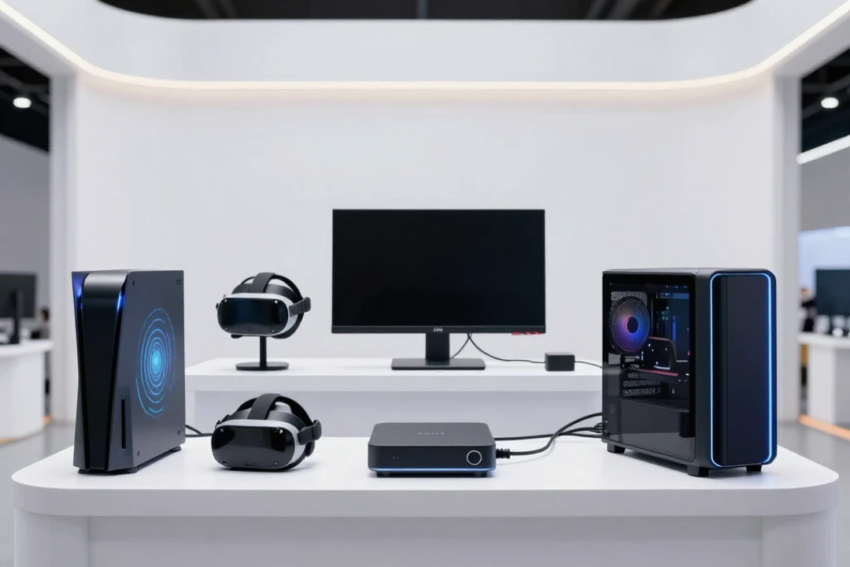
The gaming industry is entering a new era driven by artificial intelligence, virtual reality, cloud computing, advanced graphics, and next-generation hardware. In 2026, gaming is no longer limited to traditional PCs and consoles. Players can experience games through powerful desktops, laptops, handheld devices, cloud platforms, smartphones, VR headsets, and connected entertainment systems.
The future of gaming technology is focused on creating more immersive, intelligent, accessible, and personalized experiences. Artificial intelligence is helping developers build smarter characters and improve game development, while cloud gaming is making supported games available across more devices. At the same time, next-generation GPUs, faster SSDs, advanced displays, and improved controllers are pushing local gaming performance forward.
This article explores the most important gaming technology trends shaping the future.
1. Artificial Intelligence Will Transform Gaming
Artificial intelligence is expected to play a major role in the future of gaming.
AI can assist game developers with:
- Game testing
- Animation
- Dialogue
- Asset creation
- Level design
- Quality assurance
- Player behavior analysis
These applications can reduce repetitive work and help development teams experiment more efficiently.
Smarter NPCs
One of the most exciting uses of AI is improving non-player characters.
Traditional NPCs often follow predetermined scripts. More advanced AI systems can potentially allow characters to respond dynamically to player actions.
This could make game worlds feel more realistic and unpredictable.
Future games may feature NPCs that remember interactions, adapt to player behavior, and respond differently depending on the situation.
2. AI-Powered Graphics
AI is also changing how games render graphics.
Modern gaming technologies can use AI-assisted methods for:
- Image upscaling
- Frame generation
- Image reconstruction
- Performance optimization
These technologies can help deliver higher visual quality without requiring every frame to be rendered entirely at native resolution.
Why AI Graphics Matter
Modern games are becoming increasingly demanding.
High-resolution textures, advanced lighting, ray tracing, and large environments require significant GPU resources.
AI-assisted rendering can help developers balance image quality and performance.
This will become particularly important as 4K and higher-resolution gaming become more common.
3. Virtual Reality Gaming
Virtual reality is one of the most immersive areas of gaming technology.
VR headsets allow players to experience digital environments from a first-person perspective.
Applications include:
- Gaming
- Fitness
- Training
- Simulation
- Social interaction
- Entertainment
Future VR systems may become lighter, more comfortable, and more powerful.
Improved displays, tracking systems, controllers, and wireless technology could make VR more practical for everyday gaming.
The Challenge of VR
VR still faces challenges such as:
- Hardware cost
- Comfort
- Motion sickness
- Battery limitations
- Limited game libraries
Solving these issues will be important for wider adoption.
4. Mixed Reality and Spatial Computing
Mixed reality combines digital objects with physical environments.
Instead of completely replacing the real world, mixed reality places virtual content into the user’s surroundings.
Potential gaming applications include:
- Interactive environments
- Fitness games
- Social experiences
- Educational games
- Location-based gaming
Spatial computing could eventually create new gaming experiences that do not depend entirely on traditional monitors or televisions.
5. Cloud Gaming Will Expand Access
Cloud gaming allows supported games to run on remote servers while gameplay is streamed to the player’s device.
This can reduce the need for powerful local hardware.
Players may be able to access supported games using:
- PCs
- Laptops
- Smartphones
- Tablets
- Smart TVs
- Handheld devices
Advantages of Cloud Gaming
Cloud gaming can provide:
- Device flexibility
- Quick access to supported games
- Lower hardware requirements
- Easier cross-device experiences
It can be especially useful for users who cannot afford expensive gaming PCs.
Cloud Gaming Challenges
The biggest challenge is network performance.
Cloud gaming depends on:
- Internet speed
- Latency
- Network stability
- Server availability
High latency can make games feel unresponsive.
As broadband, Wi-Fi, and mobile networks improve, cloud gaming could become increasingly practical.
6. Next-Generation Gaming Hardware
Powerful local hardware will remain important.
Gaming PCs and consoles will continue to improve their processing and graphics capabilities.
Important components include:
- CPUs
- GPUs
- RAM
- SSDs
- Cooling systems
- Power supplies
More Powerful GPUs
GPUs will continue to drive advances in gaming graphics.
Future graphics hardware is expected to support:
- Higher resolutions
- Faster frame rates
- Advanced ray tracing
- AI-assisted rendering
- More detailed environments
Faster CPUs
CPUs are also becoming increasingly important as games feature larger worlds, complex simulations, and more sophisticated AI systems.
Future processors will need to balance high performance with energy efficiency.
7. Faster SSD Storage
Modern games can occupy large amounts of storage.
Fast SSDs provide rapid access to game files and can reduce loading times.
Future games may use high-speed storage to stream detailed environments in real time.
This is particularly important for open-world games where large amounts of data need to be loaded as players move through the environment.
8. High-Refresh-Rate Gaming Displays
Gaming monitors and televisions are becoming faster and more advanced.
Future gaming displays are likely to focus on:
- Higher refresh rates
- Lower response times
- Better HDR
- Higher resolutions
- Improved contrast
- Lower input latency
Competitive gamers may prioritize refresh rate and response time, while cinematic players may prefer high resolution and image quality.
4K Gaming
4K gaming offers highly detailed visuals but requires powerful hardware.
As GPU technology improves, maintaining high frame rates at 4K should become increasingly practical.
9. Advanced Gaming Controllers
Controllers are also becoming more immersive.
Modern controllers can include:
- Haptic feedback
- Adaptive triggers
- Motion sensors
- Custom buttons
- Wireless connectivity
Future controllers could provide even more detailed feedback.
For example, different surfaces, impacts, or environmental effects could be represented through advanced haptic systems.
10. Spatial Audio Technology
Sound is an important part of immersive gaming.
Spatial audio technologies can help players identify where sounds originate.
This can improve:
- Immersion
- Environmental awareness
- Competitive gameplay
- Storytelling
Future gaming headsets may combine improved microphones, noise cancellation, spatial audio, and AI-based voice processing.
11. Faster and More Reliable Gaming Networks
Online gaming depends heavily on network performance.
The future will benefit from improvements in:
- Fiber broadband
- Wi-Fi
- 5G
- Network routing
- Game servers
Lower latency can improve competitive multiplayer gaming and cloud gaming.
As online worlds become larger and more interactive, reliable connectivity will become even more important.
12. Cross-Platform Gaming
Cross-platform gaming is helping connect players across supported systems.
Instead of limiting multiplayer communities to one platform, developers can allow compatible players to interact across multiple devices.
This can increase player populations and make games more accessible.
Future gaming ecosystems may also allow users to move between PC, console, handheld, and cloud platforms more seamlessly.
13. Handheld Gaming Will Become More Powerful
Handheld gaming devices are becoming increasingly capable.
Modern handheld systems can provide experiences that previously required traditional gaming PCs or consoles.
Important areas of development include:
- Efficient processors
- Better displays
- Improved cooling
- Longer battery life
- Faster storage
- Better controls
Battery Efficiency
Battery life is one of the biggest challenges for portable gaming.
Future hardware will need to provide more performance without dramatically increasing power consumption.
Advances in chip design and battery technology could make this possible.
14. AI in Game Development
AI will not only affect players. It will also change how games are made.
Development teams can use AI to assist with:
- Prototyping
- Testing
- Dialogue generation
- Asset workflows
- Bug detection
- Player analytics
AI can help developers spend more time on creative and strategic tasks.
However, human creativity, design judgment, storytelling, and artistic direction will remain important.
15. More Realistic Game Worlds
Game worlds are becoming larger and more detailed.
Future games may feature:
- More realistic physics
- Dynamic weather
- Advanced lighting
- Responsive environments
- Smarter characters
- Detailed ecosystems
AI and modern game engines can help developers create environments that respond more naturally to player actions.
This could make open-world games feel more alive.
16. Gaming and Content Creation
Gaming and content creation are increasingly connected.
Players can stream gameplay, create videos, produce tutorials, and share highlights.
AI tools can help with:
- Video editing
- Captions
- Highlight selection
- Audio enhancement
- Content organization
This can reduce the technical barrier for new creators.
Benefits of Future Gaming Technology
The future of gaming technology can provide several benefits.
Greater Immersion
VR, spatial audio, haptics, and realistic graphics can create deeper experiences.
Better Performance
Advanced CPUs, GPUs, SSDs, and displays can improve gameplay.
Greater Accessibility
Cloud gaming and handheld devices can allow more people to access games.
Smarter Gameplay
AI can create more dynamic characters and personalized experiences.
Faster Development
AI tools can automate certain repetitive development tasks.
Better Connectivity
Cross-platform gaming and improved networks can connect larger communities.
Challenges for the Future
Gaming technology also faces important challenges.
Cost
Advanced gaming hardware can be expensive.
Privacy
Online platforms and AI systems may collect large amounts of user information.
Cybersecurity
Connected gaming systems can face account and network security threats.
AI Ethics
AI-generated content creates questions about ownership, originality, and employment.
Internet Dependence
Cloud gaming requires reliable connectivity.
Energy Consumption
High-performance gaming hardware can consume significant power.
How Gamers Can Prepare
Gamers do not need to buy every new device.
A practical approach is to identify the biggest limitation in an existing setup.
For example:
- Upgrade the GPU for better graphics.
- Upgrade the SSD for faster loading.
- Upgrade RAM for multitasking.
- Upgrade the monitor for smoother gameplay.
- Improve internet connectivity for online gaming.
- Upgrade the headset for better audio.
Players should also consider long-term software support and compatibility before investing in new technology.
Conclusion
The future of gaming technology will be shaped by artificial intelligence, virtual reality, cloud gaming, next-generation hardware, faster storage, advanced displays, spatial audio, improved networking, and powerful handheld devices.
AI will make games and development tools smarter, while VR and mixed reality will create new forms of immersion. Cloud gaming will provide greater flexibility, and powerful CPUs and GPUs will continue pushing graphics and performance forward.
The gaming industry is moving toward a future where devices, platforms, and digital services work together more seamlessly. Players will have more choices than ever, from high-end gaming PCs and consoles to portable systems and cloud-based platforms.
As these technologies mature, the goal will be more than simply creating better-looking games. The real future of gaming technology is about creating experiences that are smarter, more immersive, accessible, connected, and personalized for players around the world.