Introduction
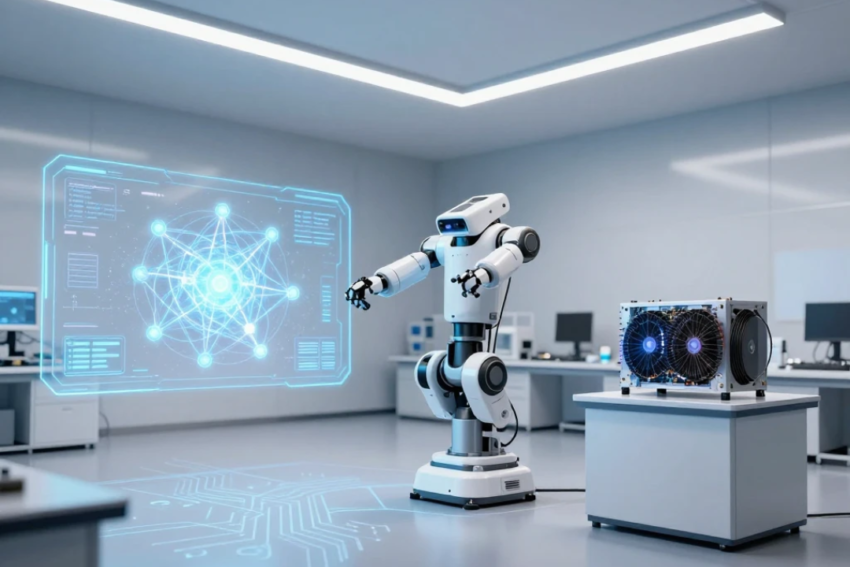
Technology is evolving at an incredible speed, and 2026 is bringing several innovations closer to real-world adoption. Artificial intelligence, robotics, quantum computing, advanced connectivity, spatial computing, biotechnology, clean energy, and edge computing are among the technologies attracting significant attention.
The top emerging technologies in 2026 are changing how businesses operate, how people interact with digital services, and how industries solve complex problems. Some technologies are already being used commercially, while others are still in research and development.
Artificial intelligence is driving automation across industries, robotics is becoming more intelligent, quantum computing is progressing toward practical applications, and connected technologies are creating increasingly smart environments.
This article explores the most important emerging technology trends in 2026, their applications, benefits, challenges, and potential impact on the future.
What Are Emerging Technologies?
Emerging technologies are innovations that are new, rapidly developing, or gaining significant adoption.
They can introduce new capabilities or transform existing industries.
Important examples include:
- Artificial intelligence
- Robotics
- Quantum computing
- Extended reality
- Edge computing
- Internet of Things
- Advanced connectivity
- Biotechnology
- Clean energy
- Autonomous systems
These technologies often develop together. The biggest impact may come from combining multiple technologies rather than using them independently.
1. Artificial Intelligence and Generative AI
Artificial intelligence is one of the most important emerging technologies in 2026.
AI systems can analyze information, recognize patterns, generate content, automate tasks, and support decision-making.
Generative AI can produce:
- Articles
- Images
- Videos
- Audio
- Software code
- Presentations
- Business documents
Organizations are using AI for customer service, marketing, software development, research, data analysis, and automation.
AI Agents
AI agents are becoming an important area of development.
Unlike basic chatbots, AI agents can potentially complete multi-step workflows by interacting with software and digital tools.
For example, an AI agent could analyze information, prepare a report, organize data, and complete related tasks according to predefined instructions.
However, organizations need strong permission controls and monitoring when deploying autonomous AI systems.
2. Advanced Robotics
Robotics is rapidly evolving because of improvements in artificial intelligence, sensors, computer vision, batteries, and computing hardware.
Modern robots can already perform tasks in:
- Manufacturing
- Warehouses
- Agriculture
- Healthcare
- Logistics
- Research
AI allows robots to understand environments and respond to changing conditions.
Humanoid Robots
Humanoid robots are receiving increasing attention because their physical design can allow them to operate in human-oriented environments.
Potential applications include:
- Factory work
- Warehouse operations
- Inspection
- Assistance
- Dangerous tasks
- Logistics
Widespread adoption will depend on cost, safety, reliability, battery performance, and AI capabilities.
3. Quantum Computing
Quantum computing represents a fundamentally different approach to computation.
Traditional computers use bits, while quantum computers use qubits.
Quantum computers may eventually provide advantages for certain complex problems involving:
- Drug discovery
- Materials research
- Optimization
- Scientific simulations
- Financial modeling
- Cryptography
Quantum computing is still in an early stage.
Researchers face challenges such as:
- Error correction
- Hardware stability
- Scaling
- Environmental requirements
- Programming complexity
Rather than replacing conventional computers, quantum computers are more likely to complement them for specialized workloads.
4. Edge Computing
Edge computing moves data processing closer to the devices that generate information.
Instead of sending every piece of information to a distant cloud data center, some processing can happen locally.
This can reduce latency and improve responsiveness.
Potential applications include:
- Smart factories
- Autonomous vehicles
- Healthcare devices
- Smart cities
- Security systems
- IoT networks
Edge computing becomes particularly powerful when combined with AI.
An edge AI system can analyze information locally and make decisions quickly without always depending on a remote server.
5. Internet of Things
The Internet of Things, or IoT, connects physical devices to networks.
Examples include:
- Smart homes
- Wearable devices
- Smart appliances
- Industrial sensors
- Connected vehicles
- Security systems
IoT devices generate large amounts of data.
AI can analyze this data to identify patterns and automate decisions.
For example, industrial IoT systems can monitor equipment and potentially detect unusual behavior before a major failure occurs.
However, connected devices also create cybersecurity risks, making secure authentication and regular updates essential.
6. Extended Reality
Extended reality includes:
- Virtual reality
- Augmented reality
- Mixed reality
These technologies combine digital information with immersive or real-world environments.
Potential applications include:
- Gaming
- Education
- Employee training
- Healthcare
- Architecture
- Engineering
- Remote collaboration
Businesses can use immersive technology to create realistic training simulations.
For example, employees can practice procedures in virtual environments without the risks associated with real-world training.
7. Advanced Connectivity
Connectivity is the foundation of many emerging technologies.
5G networks support faster communication, lower latency, and large numbers of connected devices.
Applications include:
- Smart cities
- Industrial automation
- Connected vehicles
- Remote services
- Cloud gaming
- IoT
Future connectivity improvements could enable more responsive autonomous systems and real-time applications.
High-speed networks will also support the growing number of AI-powered devices and services.
8. Biotechnology and AI-Powered Healthcare
Technology is increasingly transforming healthcare and biotechnology.
AI can help researchers analyze large amounts of biological and medical information.
Potential applications include:
- Drug discovery
- Medical imaging
- Personalized medicine
- Genetic research
- Disease analysis
- Remote monitoring
Wearable devices can also collect information that supports health and fitness monitoring.
As these technologies develop, privacy, security, clinical validation, and ethical considerations will remain essential.
9. Clean Energy Technology
The development of clean energy technologies is another major innovation area.
Important technologies include:
- Advanced batteries
- Solar power
- Energy storage
- Smart grids
- Electric vehicles
- Energy management systems
Battery innovation is especially important because energy storage can support renewable energy and electric transportation.
AI can also help optimize energy consumption by predicting demand and managing resources.
Smart Grids
Smart grids use digital technologies to monitor and manage electricity systems.
They can potentially improve efficiency and help integrate renewable energy sources.
10. Autonomous Vehicles
Autonomous transportation combines AI, sensors, cameras, mapping, and high-performance computing.
Modern vehicles already offer advanced driver-assistance features.
Future autonomous systems may support:
- Passenger transportation
- Delivery services
- Logistics
- Public transportation
- Industrial vehicles
Safety remains one of the biggest requirements.
Autonomous systems must perform reliably in complex environments, and regulatory frameworks must evolve alongside the technology.
11. Digital Twins
Digital twins are virtual representations of physical systems.
They can use real-world data from sensors to represent how equipment, buildings, or infrastructure operates.
Digital twins can help businesses:
- Monitor performance
- Test scenarios
- Predict maintenance requirements
- Optimize operations
- Reduce downtime
Industries such as manufacturing, energy, transportation, and construction can benefit from digital twin technology.
12. Advanced Cybersecurity
As emerging technologies become more connected, cybersecurity becomes increasingly important.
AI-powered cybersecurity systems can help detect unusual activity and analyze security events.
Modern security strategies increasingly include:
- Zero-trust security
- Identity protection
- Multi-factor authentication
- AI-powered monitoring
- Automated response
- Cloud security
Organizations must also protect AI systems themselves.
As AI agents gain more access to business tools and data, permission management and monitoring become increasingly important.
13. Cloud and AI Infrastructure
Cloud computing remains a major foundation for digital transformation.
Modern cloud platforms provide businesses with access to:
- Computing resources
- Storage
- AI services
- Databases
- Analytics
- Collaboration tools
AI workloads are increasing demand for specialized computing infrastructure.
Organizations are therefore exploring combinations of cloud, edge, and specialized hardware to improve performance and efficiency.
14. Digital Identity and Passwordless Authentication
Digital identity is becoming increasingly important as more services move online.
Traditional passwords can be vulnerable to phishing, credential theft, and reuse.
Passwordless technologies such as passkeys can provide stronger authentication experiences.
Other approaches include:
- Biometrics
- Security keys
- Multi-factor authentication
- Digital credentials
- Risk-based authentication
Protecting digital identity will be essential as online services become more integrated into everyday life.
Benefits of Emerging Technologies
The top emerging technologies in 2026 can provide several advantages.
Increased Productivity
Automation can reduce repetitive work.
Better Decision-Making
AI can process large amounts of data.
Improved Efficiency
Smart systems can optimize resources and processes.
New Business Models
Technology can create new products and services.
Better Customer Experiences
AI and digital platforms can provide more personalized interactions.
Scientific Progress
Quantum computing, biotechnology, and advanced AI may accelerate research in specialized fields.
Challenges of Emerging Technology
Emerging technologies also create significant challenges.
Cybersecurity
More connected devices can create additional attack surfaces.
Privacy
AI and IoT systems may collect large amounts of personal information.
Cost
Advanced hardware and infrastructure can be expensive.
Skills
Businesses need workers with new technical capabilities.
Regulation
Governments need to establish appropriate rules for rapidly changing technologies.
Ethical Issues
AI, robotics, biotechnology, and autonomous systems raise important questions about responsibility and decision-making.
How Businesses Can Prepare for Emerging Technology
Businesses should adopt emerging technologies strategically.
A useful approach includes:
- Identify real business problems.
- Research relevant technology.
- Start with a small pilot project.
- Measure results.
- Evaluate security and privacy.
- Train employees.
- Scale successful solutions.
Companies should focus on practical value rather than adopting technology simply because it is trending.
Future of Emerging Technology
The future will increasingly involve technology convergence.
AI can make robots smarter.
IoT can provide data for AI systems.
Edge computing can process that data locally.
5G can connect devices with lower latency.
Quantum computing may eventually solve specialized computational problems.
Digital twins can connect physical systems with digital models.
This combination could create highly automated and intelligent environments.
Conclusion
The top emerging technologies in 2026 are reshaping industries and creating new possibilities across the digital economy.
Artificial intelligence, robotics, quantum computing, edge computing, IoT, extended reality, advanced connectivity, biotechnology, clean energy, autonomous vehicles, digital twins, cybersecurity, cloud infrastructure, and digital identity are among the most important technologies to watch.
Not every emerging technology will become mainstream immediately. Some will require years of development, investment, regulation, and testing.
For businesses and technology users, staying informed is essential. The organizations that experiment responsibly, invest strategically, and prioritize security and privacy will be better prepared for the next stage of digital transformation.
The future of technology will not be defined by one invention. It will be shaped by the combination of intelligent software, advanced hardware, connected systems, and human creativity.